











The design statement with regard to the proposed building on the site of the Beach Tavern is somewhat questionable.
The design statement by the architect, proposing the three storey building at the site of the Beach Tavern can be read here.
Dating and history of building
Key details about the situation with regard to the location are elided, it could be argued with deliberation.
Has the relationship between this proposed building and the history of the location been considered at all?
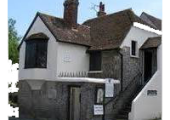
The architect suggests that the date of the building is unknown. This is not the case. Local records show that as early as the 1890s that there were five tea rooms in operation in the locality, The Honeypot Tea Rooms in this building can be identified as having been in service as early as the first decade in the 1900s. A postcard to this point is currently on sale on ebay.
The Literary Year Book, published in Liverpool in 1906 identifies a short literary work “Rose at the Honeypot’ as being for sale in that year, identified as being in Pevensey Bay.
It can accurately be stated that the date of the building is between 1890 and 1906. The building has been in service as an economic part of Pevensey Bay since at least 1906, constituting over 100 years service to the community.
It would also be reasonable to record that the fact that the architect does not know the date of the building is because he has not bothered to look. Without question the building is of historic note.
Has the history of the building been ignored with deliberation? Of course it would serve no purpose to the architect to suggest that the character and history of the building has any standing in the community. This standing is represented by over 100 years continuous service to the community.
Building surrounded by residential properties
It is not correct to say that the building is surrounded by residential properties.
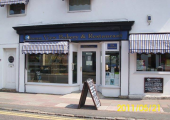
As you approach the building from the Eastbourne Road, turn left past the front of the building, then sharp right into Bay Terrace. You will see a row of late Victorian houses, facing the Beach Tavern on the other side of the road. Amongst these houses are a number of businesses. It would be news for example to John Barry and Co Solicitors, a company that has practiced in Pevensey Bay since 1983, that no business exists here.
As you approach the site from the Eastbourne Road walking through Pevensey Bay heading East you walk through the heart of the Pevensey Bay business community. There are a total of 18 shops, service outlets and cafes. Normans Court (a block of residential flats), which is cited in the design statement is the exemption in this description. To have ignored this context in the entirety, could be described as wilful.
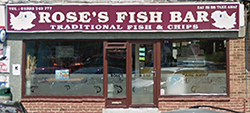
The intention here is to build a huge 3 storey block of flats in the heart of the Pevensey Bay business community, dominating and altering the context of the Bay with the attractive setting of cafes, convenience store, post office, hairdressers, traditional fish and chip shop, hotel, estate agent, gift shop, chinese takeaway, pizza takeaway, laundrette, two indian restaurants, one indian takeaway, newsagents, barbers shop and pharmacy.
To have ignored this context is somewhat questionable is it not?
Both sides of the road are characterised by this business context. 12 of the 18 shops are within metres of the site.
Did the architect not notice these buildings? Or perhaps in the calculation in making these points he assumed that some very basic questions about the statement would not arise.
Of course we are left to wonder the purpose of the architect in making this statement. Demolishing a character building of historical note, in the heart of the business community, to be replaced by 8 luxury flats three storeys high, of such huge volume, is the proposal here. Only by ignoring this context, can the design statement be said to be in any way accurate.
The proposed development looks to provide a “1 1 bedroom apartment and 7 2 bedroom apartments over 3 floors, with associated parking and landscaping”.
Proposal to landscape
What exactly is the proposal to landscape in this context?
The landscape is of a vernacular, eclectic nature. As a unique coastal location, The Guardian in an article published in September 2015 noted the vernacular values of the seafront in Pevensey Bay, in particular (as well as the old groynes and spectacular sunsets) the late Edwardian properties on the seafront in Norman Road.
The Bay Hotel, facing the Beach Tavern, built in 1899 (the clue is that the date is on the building) directly references The Western Pavilion in Brighton (situated along Western Road), built by Amon Henry Wilds. (Nicholas Antram and Richard Morrice, Brighton and Hove Architecture 2008). This building followed the completion of the Royal Pavilion in 1821.
Beachlands (built in four waves beginning in 1933) was one of the first modernist estates in the country. Architectural historians come from all over the country to take pictures of the estate. The historical value of the estate is studied in “Sun, Sea and Sand: The Great British Seaside”, Steven Bragg (2006).
The building of the estate began the year after the construction of the world famous De La Warr Pavilion, the first modernist building in the country for public use (Erich Mendelsohn and Serge Chermayeff), along the road in Bexhill.
Beachlands in Pevensey Bay was constructed at the birth of the modernist movement in this country.
“The Sandcastle” on the beach has been restored, at considerable cost to the owner, to the former full art deco status, in all the glory that the building merits.
Added to this eclectic mix are the oyster houses, part of the Beachlands Estate and the Arts and Crafts styled houses on the seafront located along Norman Road, also noted by The Guardian in their article.
The modernist house along the Eastbourne Road, the houses along Timberlaine, and Grenville Road (also constructed by Saunders and Martin, the builders responsible for Beachlands), are also a part of the distinct character of Pevensey Bay.
Historic England lists Innings Cottage dating from circa 1830. A building on these foundations appears to date from much earlier. Registered publicans at the historic Castle Inn date back to at least 1859.
Which particular aspect of the architecture of the identifiable vernacular values of Pevensey Bay does the architect reference in this design statement?
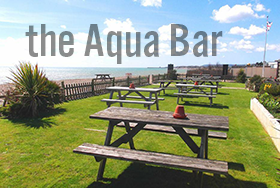
There appears to be one. This aspect of the statement has led to some amusement amongst residents. It is intended that the proposed design will fit into the locality by picking up the colour of beach huts. The excitement with which the architect adds this bold flair to his proposal has been questioned by residents. As they point out, somewhat puzzled, there are no beach huts in Pevensey Bay.
Architect conclusion
In conclusion the architect explains that the build will excite and enhance the town.
Perhaps the architect would like to identify the local people that have been excited by the prospect of this build and this proposal. In what sense does this huge building enhance the town?
Seemingly, the fact that Pevensey Bay is not a town has also escaped the attention of the architect.
Taken at face value the statement by the architect with regard to this proposed building is open to a degree of ridicule.
In every sense this proposed building would dominate, supercede and alter the essential character of Pevensey Bay and the heart of business here in this location.
There is no relationship between this proposed building and Pevensey Bay.
It would be accurate to say that this design statement is lacking in both fact and context.
Simon Montgomery
editor, Bay Life